Tracing digital platform algorithms reshaping participant strategies in live tennis exchanges
Freya Schwarz · Sep 15, 2026
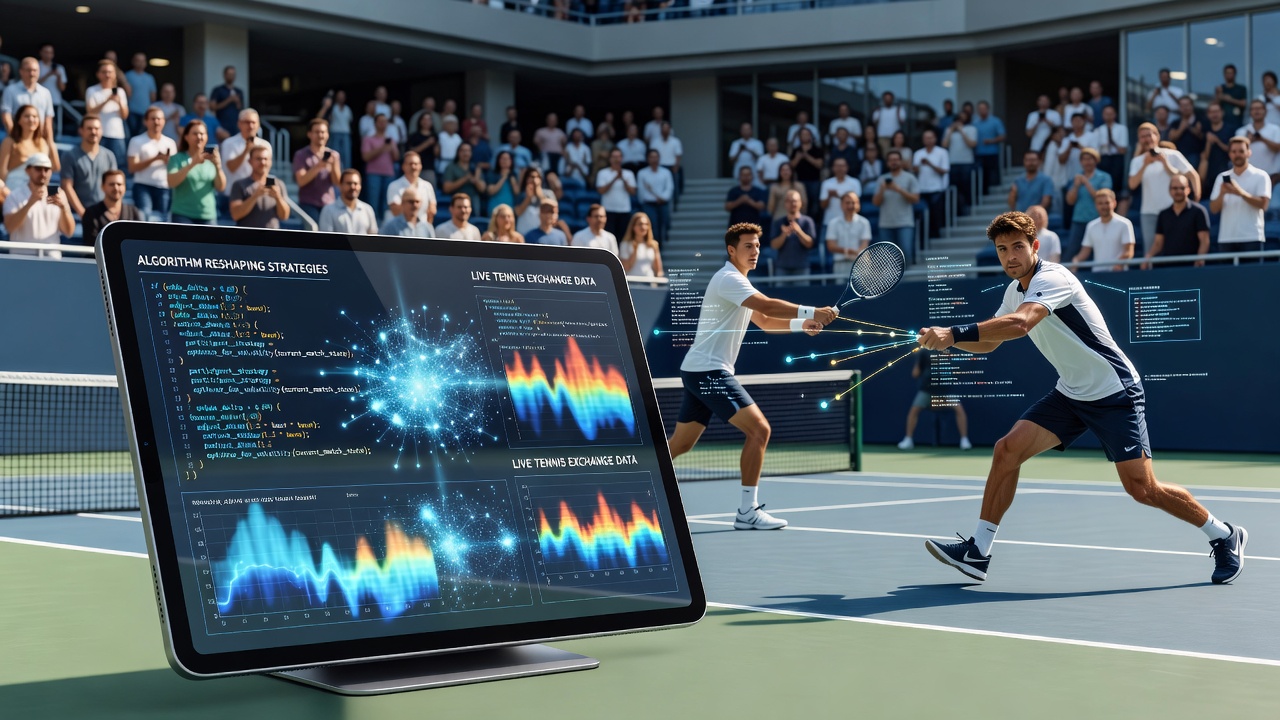
Tracing digital platform algorithms reshaping participant strategies in live tennis exchanges
Digital platforms hosting live tennis exchanges now deploy algorithms that process match data in real time, and these systems recalibrate odds based on variables such as player movement patterns, serve velocity trends, and point outcome probabilities, which has prompted participants to revise their entry and exit tactics during ongoing matches.
Algorithm mechanics in live tennis markets
Platforms collect continuous streams of performance metrics from official scoring feeds together with supplementary inputs like ball tracking systems, while machine learning models identify deviations from historical player baselines and trigger immediate market shifts, and observers note that these adjustments occur within fractions of a second after each point concludes.
Participants who once relied on manual observation now incorporate automated monitoring tools that mirror platform logic, and this alignment allows them to anticipate liquidity changes before public odds fully reflect new information, although the speed differential between human reaction and algorithmic execution remains a defining constraint.
Strategic shifts among exchange participants
Traders on these exchanges have moved away from pre-match positioning toward layered in-play sequences that respond to micro-patterns such as second-serve success rates under fatigue conditions, and data indicates that volume spikes occur most frequently during changeovers when algorithms recalibrate after clusters of extended rallies.
One documented approach involves scaling positions incrementally as match momentum indicators cross predefined thresholds, and this method reduces exposure during volatile periods while capitalizing on temporary mispricings that arise when multiple algorithms compete for the same information edge.

Integration of external data sources
Algorithms now incorporate weather telemetry, court surface temperature readings, and even crowd noise levels converted into sentiment proxies, and participants who integrate similar feeds gain marginal advantages in predicting when markets will widen or tighten, according to ATP Tour reports on technological adoption across major events.
Research published by the University of Melbourne highlights how multi-source data fusion alters liquidity distribution during tiebreaks, and those patterns have encouraged participants to program conditional orders that activate only when specific combinations of variables align within narrow time windows.
Developments observed through September 2026
Platform updates rolled out ahead of the 2026 US Open incorporated refined neural network layers capable of weighting recent head-to-head subsets more heavily than career aggregates, and exchange activity logs from that period show tighter spreads during baseline rallies alongside wider gaps following unexpected drop shots.
Participants responded by refining their own models to discount older match data during late-season tournaments, and this recalibration produced measurable differences in profit distribution across user cohorts tracked by independent analytics providers.
Regulatory and operational context
Governing bodies have begun requiring disclosure of algorithmic weighting factors that influence market stability, and exchanges must now log decision timestamps for audit purposes, which has introduced new layers of compliance overhead yet also created standardized datasets that researchers can analyze for systemic bias patterns.
Industry groups such as the European Gaming and Betting Association have published guidelines on transparency thresholds, and platform operators have adjusted their public documentation to reflect these expectations without altering core algorithmic functionality.
Conclusion
Digital platform algorithms continue to compress decision windows in live tennis exchanges, and participants who maintain synchronized analytical frameworks demonstrate sustained adaptation to these evolving conditions, while the underlying data infrastructure expands to capture additional performance dimensions that further refine market responsiveness.