Weather-Driven Variables and Payout Correlations in Outdoor Athletic Events
Freya Schwarz · Aug 19, 2026
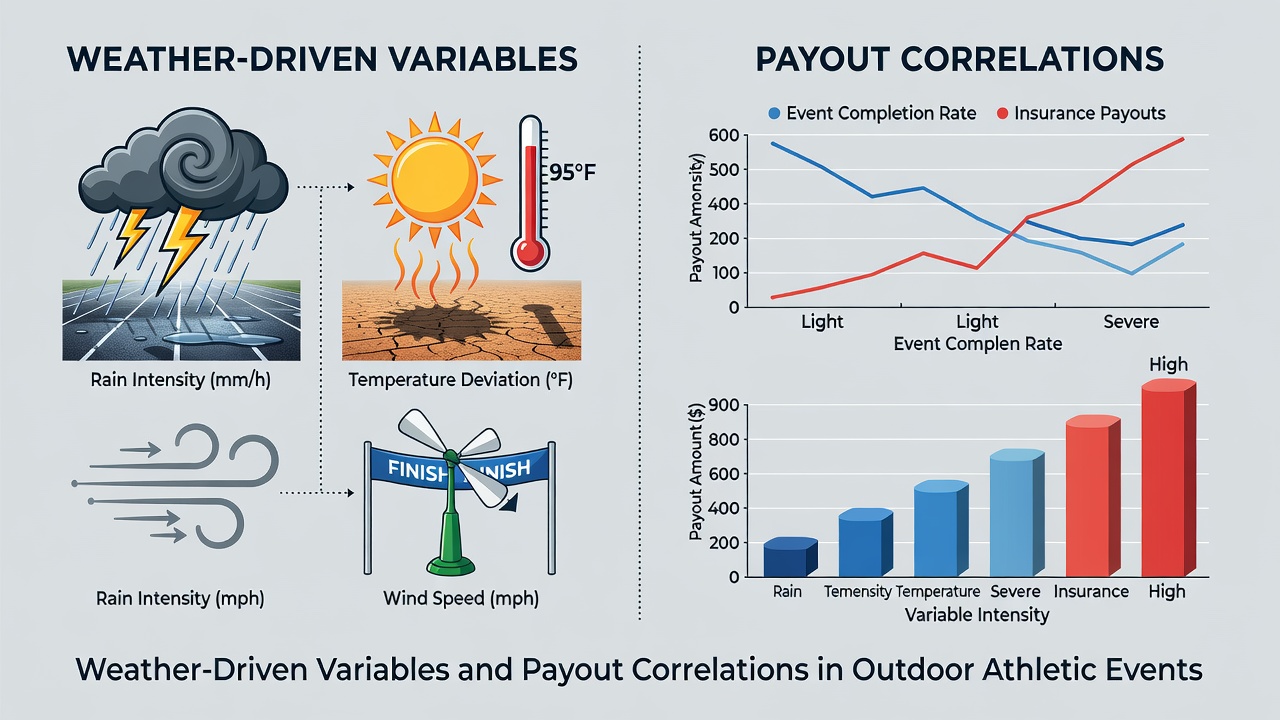
Weather-Driven Variables and Payout Correlations in Outdoor Athletic Events
Outdoor athletic events expose competitors to a range of weather-driven variables that directly influence performance metrics, event durations, and financial settlements tied to betting markets, and analysts track these factors through detailed meteorological records paired with historical outcome data. Temperature shifts, humidity levels, precipitation rates, and wind speeds alter everything from muscle efficiency to equipment behavior, which in turn affects the probability distributions used by oddsmakers and insurers.
Temperature and Humidity as Primary Performance Modifiers
High temperatures combined with elevated humidity reduce aerobic capacity in endurance sports such as marathons and cycling races, while lower temperatures increase injury risk during explosive events like track sprints and field competitions. Researchers at institutions tracking athlete biometrics have documented how core body temperature rises accelerate fatigue rates, leading to slower finishing times that deviate from pre-event projections. Data compiled across multiple seasons shows consistent payout adjustments in markets focused on total race times or point spreads when heat indices exceed seasonal norms.
Precipitation, Wind, and Their Effects on Event Logistics
Rainfall alters surface traction in sports including baseball, soccer, and tennis, which changes scoring patterns and extends match lengths when grounds crews intervene. Wind gusts above certain thresholds affect ball trajectories in golf and baseball, producing measurable deviations in home-run frequencies and driving distances that betting models incorporate through adjusted probabilities. Observers note that these variables often cluster during specific months, creating predictable windows where outdoor venues experience elevated variance in results compared with indoor alternatives.
Quantifying Payout Correlations Through Historical Datasets
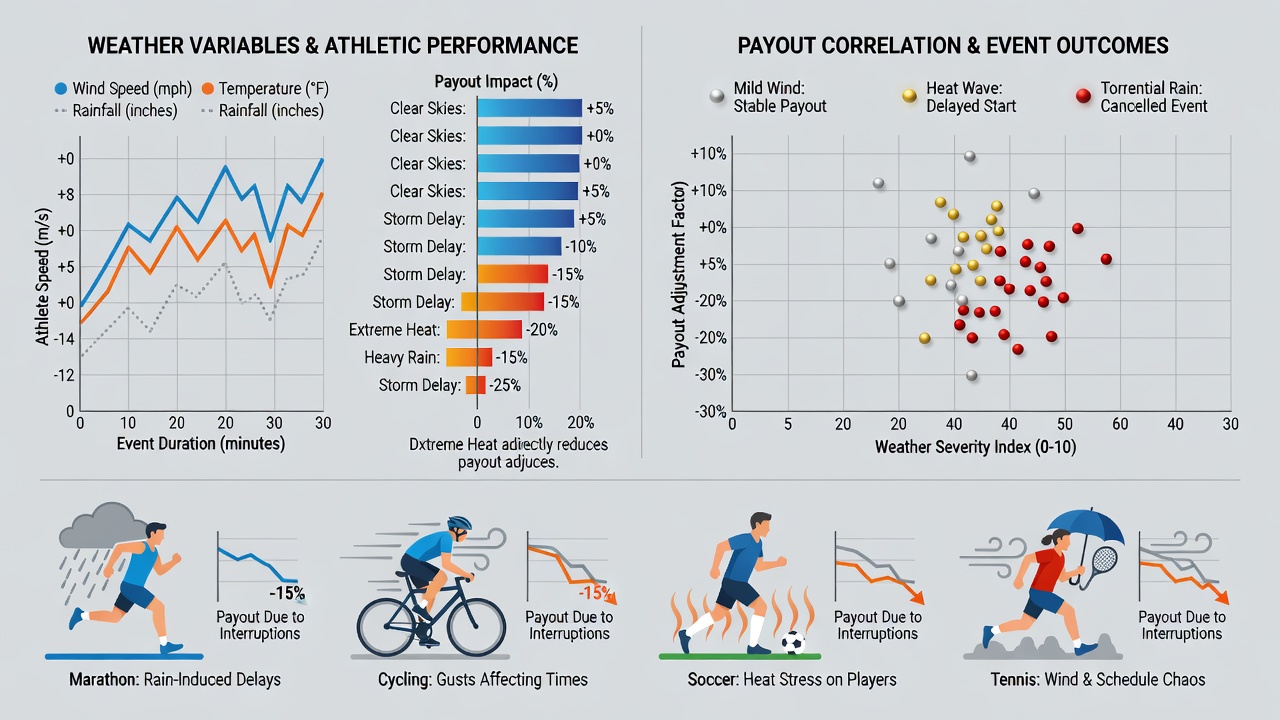
Statistical examinations of past events reveal measurable links between recorded weather parameters and deviations in settlement amounts across prop bets and over-under lines. For instance, studies examining baseball games demonstrate that games played in temperatures above 85 degrees Fahrenheit correlate with higher run totals, which shifts payouts for totals markets by percentages that align closely with meteorological forecasts issued days in advance. Similar patterns appear in tennis tournaments where humidity above 70 percent extends rally lengths and increases the likelihood of longer match durations, prompting revisions to player prop payouts. These correlations strengthen when analysts combine multiple variables rather than examining them in isolation, as combined heat and wind conditions produce compound effects on both athlete output and final scores.
Regional Variations and Data Sources
Geographic differences influence how weather variables translate into payout shifts, with events in arid climates showing stronger wind-related impacts while coastal venues experience more frequent precipitation adjustments. According to records maintained by the National Oceanic and Atmospheric Administration, certain North American stadiums record distinct seasonal clusters of weather anomalies that coincide with altered betting volumes and settlement frequencies. In Europe, data aggregated by the European Centre for Medium-Range Weather Forecasts indicates comparable patterns during summer circuits, where humidity spikes align with extended event timelines and corresponding changes in market resolutions. These regional datasets allow modelers to refine algorithms that forecast payout ranges based on projected conditions rather than relying solely on historical averages.
Case Examples from Recent Seasons
One analysis of professional golf tournaments found that rounds played under sustained winds exceeding 15 miles per hour produced scoring averages several strokes above baseline expectations, which altered payouts for player performance props and tournament winner markets in measurable ways. Another examination of outdoor track meets during periods of high humidity revealed increased rates of did-not-finish outcomes that affected insurance-style products tied to athlete completion guarantees. Such instances illustrate how weather data feeds directly into risk assessment frameworks used by those managing event-related financial instruments.
August 2026 Projections and Model Refinements
Forecasts prepared for events scheduled in August 2026 incorporate updated climate indices that account for shifting baseline temperatures and precipitation frequencies across major outdoor venues. Modeling teams integrate these projections with refined payout correlation matrices to anticipate settlement ranges for futures markets and live betting options. Adjustments made in advance allow operators to maintain balanced books when weather variables deviate from long-term norms during peak summer periods.
Conclusion
Weather-driven variables continue to shape both athletic outcomes and the financial structures built around outdoor events through documented statistical relationships rather than isolated incidents. Continued collection of paired meteorological and performance data supports ongoing refinements to predictive models that connect environmental conditions with payout distributions across diverse sports and regions.